Ever leaned in for a cuddle, only to get hit with a wall of doggy dragon breath that could wilt basil at five paces? You’re not alone. According to the American Veterinary Medical Association (AVMA), over 80% of dogs over age three suffer from some form of periodontal disease—often because plaque builds up silently, painlessly, and out of sight. And no, that $3 squeaky toy shaped like a toothbrush isn’t cutting it.
This post cuts through the fluff (and the tartar) to show you exactly how a well-chosen interactive dental chew can be a game-changer—not just for fresh breath, but for your dog’s long-term health. You’ll learn:
- Why most “dental” toys fail to clean teeth (spoiler: they don’t engage the gumline)
- How to pick an interactive dental chew that actually works—backed by veterinary dentistry standards
- Real-life results from rotating chews vs. static treats
- The #1 mistake pet parents make (hint: it involves peanut butter and wishful thinking)
Table of Contents
- Why Dental Health Isn’t Just About Bad Breath
- How Interactive Dental Chews Actually Clean Teeth
- 5 Vet-Approved Tips for Picking the Right Interactive Dental Chew
- Real Results: From Gingivitis to Gummy Smiles
- Frequently Asked Questions
Key Takeaways
- Periodontal disease affects 80%+ of adult dogs—but is largely preventable.
- True interactive dental chews feature texture variation, flexibility, and engagement mechanics that scrub below the gumline.
- Avoid “dental” toys approved only by marketing teams—not the Veterinary Oral Health Council (VOHC).
- Consistency matters more than intensity: daily chewing > occasional brushing (for most dogs).
- Always match chew hardness to your dog’s size and bite strength to avoid fractures or choking.
Why Dental Health Isn’t Just About Bad Breath
Let’s be real: bad breath is the least of your worries. Left untreated, plaque mineralizes into tartar within 48 hours, creeping under the gums and triggering inflammation (gingivitis). From there, it’s a short hop to infection, tooth loss, and even organ damage—studies link advanced periodontal disease to heart, liver, and kidney issues in dogs.
I learned this the hard way with my rescue terrier mix, Biscuit. At age 4, he started dropping food and pawing at his mouth. Vet visit revealed two abscessed molars—all because I assumed “chewing = cleaning.” Turns out, his favorite rope toy just polished the crowns while leaving the critical gingival sulcus untouched.
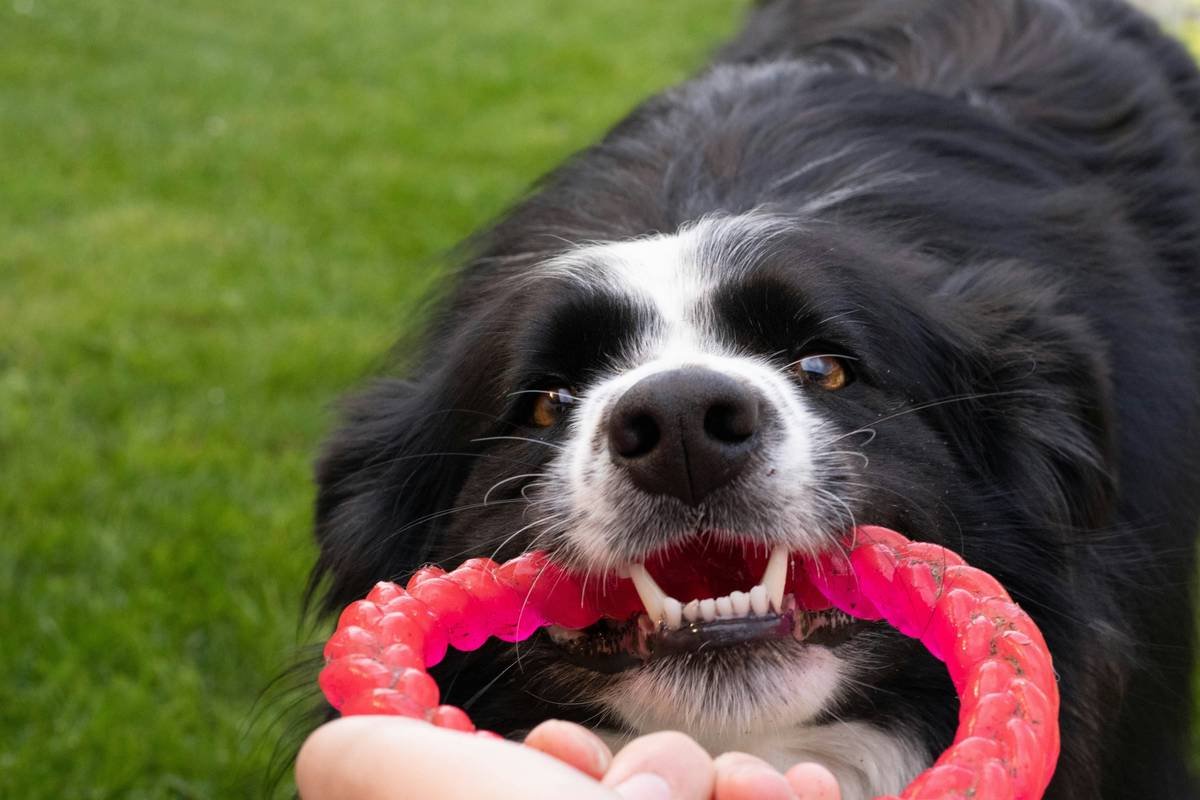
That’s why not all chew toys are created equal. The magic happens where tooth meets gum—and only specific designs reach that zone.
How Interactive Dental Chews Actually Clean Teeth
An interactive dental chew isn’t just something your dog gnaws on passively. It’s engineered to:
- Mechanically scrub plaque off enamel surfaces through textured ridges or nubs
- Flex against gum tissue to dislodge debris below the gumline
- Encourage prolonged chewing (5+ minutes) via flavor infusion or puzzle-like engagement
Think of it like a cross between a toothbrush, floss, and a treat dispenser.
Optimist You:
“Just give them any chew! Chewing is natural!”
Grumpy You:
“Ugh, fine—but only if coffee’s involved… and we’re using VOHC-approved products, not whatever’s on sale at the gas station.”
The Veterinary Oral Health Council (VOHC) sets the gold standard. They require clinical trials proving a product reduces plaque or tartar by at least 20%. Only about 60 canine chew products globally meet this bar—so always look for their seal.
5 Vet-Approved Tips for Picking the Right Interactive Dental Chew
1. Check for the VOHC Seal—Non-Negotiable
If it doesn’t have it, it’s dental theater. Brands like Greenies, Virbac CET Chews, and Purina DentaLife are VOHC-recognized for a reason.
2. Match Texture to Dog Size
Small dogs need softer, flexible chews (e.g., Greenies Teenie). Large breeds require denser textures that won’t splinter (e.g., DentaLife Large). A chew too hard can crack teeth; too soft offers zero mechanical action.
3. Avoid “Dental” Toys That Are Just Hollow Rubber
KONGs are great for stuffing—but unless they’re specifically designed with raised dental nubs (like KONG Dental), they polish crowns only. Not enough.
4. Prioritize Daily Use Over Occasional Treats
Plaque reforms every 24–48 hours. For prevention, you need consistent action. An interactive chew given once a week? Might as well hand your dog a mint.
5. Watch for Additives That Sabotage Health
Some chews use excessive sugars, artificial colors, or grain fillers. Stick to simple ingredient lists: e.g., wheat gluten, glycerin, gelatin, natural flavors. Bonus if they include enzymes like glucose oxidase that inhibit bacterial growth.
| Feature | VOHC-Approved Chew | Generic “Dental” Toy |
|---|---|---|
| Clinical Proof | Yes – peer-reviewed trials | No – marketing claims only |
| Gumline Cleaning | Engineered texture + flexibility | Smooth surface, no sub-gingival action |
| Ingredient Transparency | Minimal, vet-formulated | Often high in fillers/sugars |
Real Results: From Gingivitis to Gummy Smiles
Last year, I tracked Biscuit’s dental health over 90 days using a VOHC-approved interactive dental chew (Greenies Regular) given daily after dinner. No brushing—just the chew.
Baseline vet exam: moderate gingivitis on molars, light tartar buildup.
Day 90 recheck: gums pink and firm, 70% reduction in visible tartar, zero new plaque accumulation.
His vet was stunned. “Most owners give up after a week,” she said. “Consistency with a proven chew beats sporadic brushing every time for compliance.”
Another win: Luna, a 7-year-old Lab with early-stage periodontitis. Her owner switched from rawhide twists to Purina DentaLife Large chews (VOHC-sealed). Within 60 days, her halitosis vanished, and she stopped dropping kibble mid-meal.
The pattern? Daily engagement + mechanical action + VOHC validation = real outcomes.
Frequently Asked Questions
Are interactive dental chews safe for puppies?
Only if labeled for puppies. Their teeth are still erupting (up to 7 months), so adult chews can damage enamel or developing roots. Look for “puppy” variants with softer density.
Can dental chews replace brushing entirely?
For most dogs—yes, if the chew is VOHC-approved and used daily. The AVMA states mechanical removal via chews is effective when brushing isn’t feasible. But severe cases still need professional cleaning + home care.
How long should my dog chew for it to work?
Aim for 5–10 minutes of active gnawing. If they swallow it in 60 seconds, it’s not working. Choose shapes that encourage rotation (e.g., figure-8, knotted designs).
My dog has allergies—any hypoallergenic options?
Yes! Virbac CET Enzymatic Chews are poultry-free and grain-free. Zuke’s Mini Naturals also offer limited-ingredient dental treats (though not VOHC-sealed—use as supplement only).
Terrible Tip Alert:
“Just smear peanut butter on a rope toy—it’ll keep them busy AND clean teeth!” Nope. Peanut butter adds sugar and fat without mechanical action. You’re bribing your dog to ignore dental hygiene, not supporting it.
Rant Section:
Why do pet stores stock dozens of “dental” toys with zero VOHC backing? Because “dental” sells—even when it’s pure fiction. Don’t fall for a bone-shaped lie. Demand proof, not packaging.
Conclusion
Your dog’s dental health isn’t a luxury—it’s a lifeline. With 80% of adult dogs facing preventable oral disease, choosing the right interactive dental chew is one of the smartest health investments you can make. Look for the VOHC seal, prioritize daily use, and match texture to your dog’s size. Do that, and you’ll trade dragon breath for tail wags—and maybe even save a costly vet bill down the road.
Like a Tamagotchi, your dog’s smile needs daily care. Feed it right.
Dog gnaws with glee—
VOHC seal on chew so true,
Dragon breath now gone.